Step inside the exhibits
The Civil Rights Institute of Inland Southern California, reimagined as immersive 3D worlds.
Explore the exhibitsNow open
Exhibits
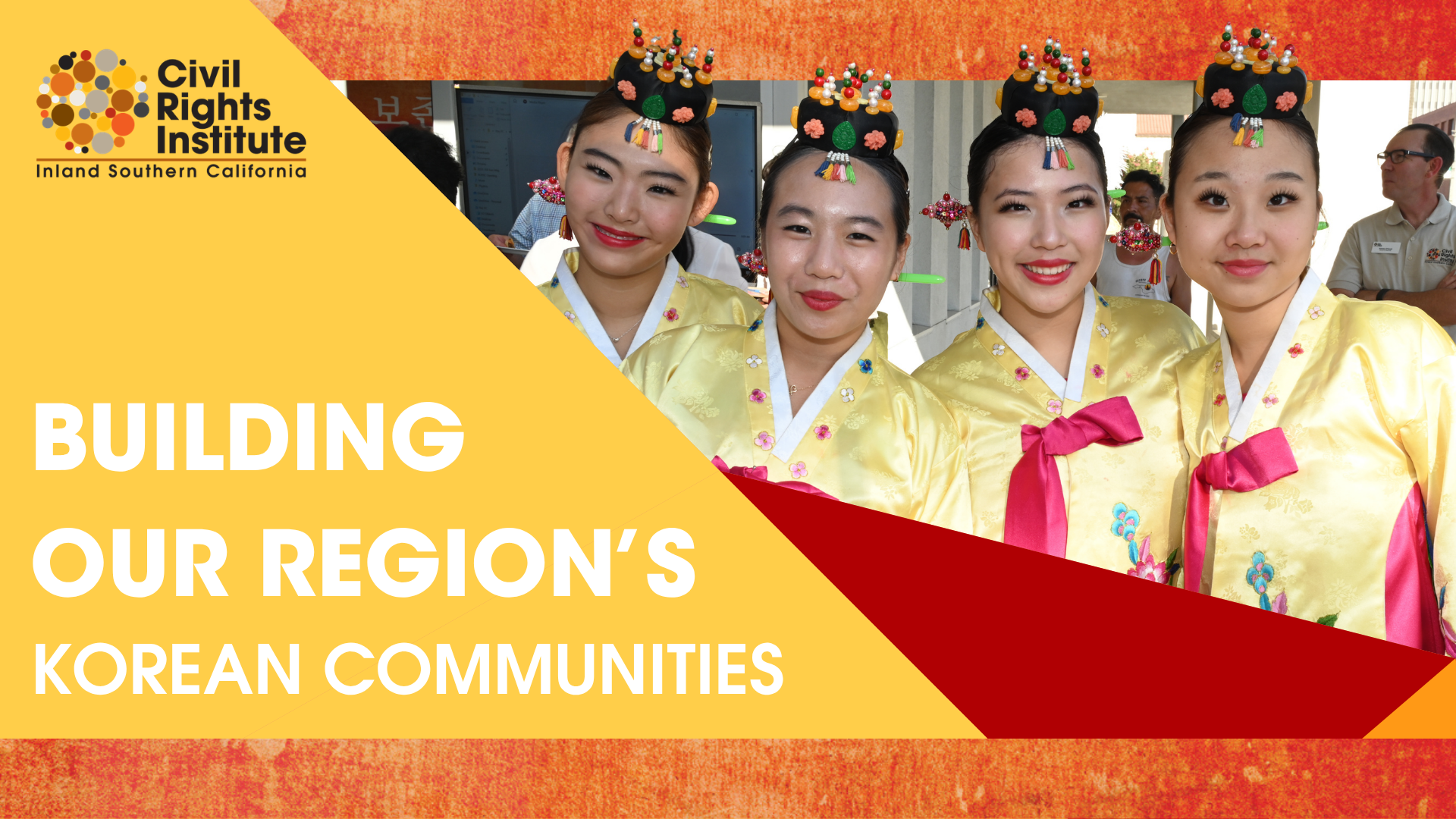 Bulding Our Region's Korean Communities"Building Our Region’s Korean Communities" tells the stories of Korean American pioneers in Riverside, Redlands, Reche Canyon, and Upland who journeyed thousands of miles across the Pacific to build vibrant communities. It highlights little-known stories, such as how Koreans in Redlands bought land before the Alien Land Law Act made it illegal, how the expulsion of Korean workers in Hemet caused an international incident, and how local Koreans organized to support Korea’s independence from Japan.Enter the exhibit
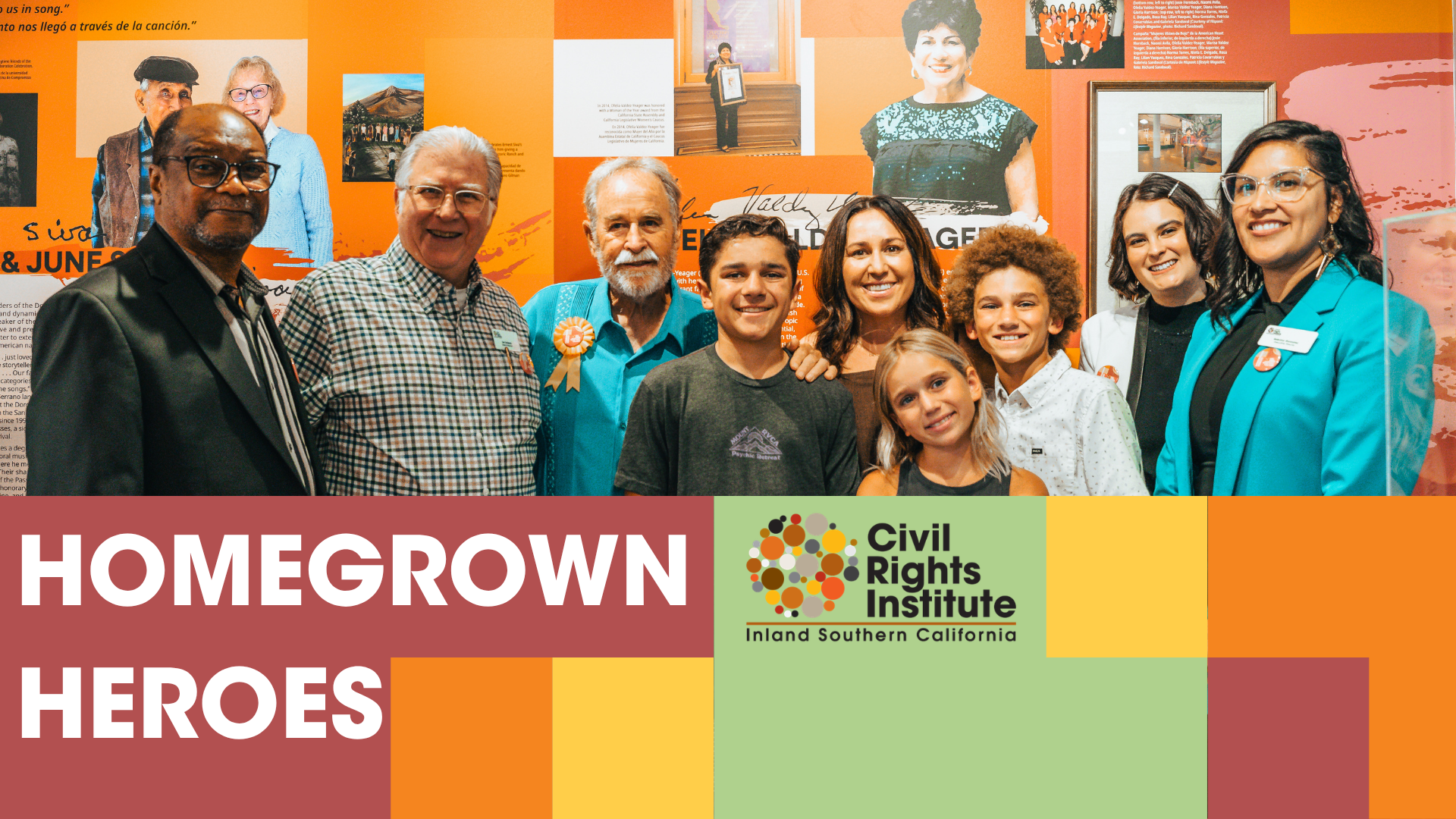 Homegrown Heroes"Homegrown Heroes" is an exhibition exploring how we advance civil rights in our region. Visit the exhibition to learn from the experiences of some of Inland Southern California’s many civil rights leaders.
These individuals are only a few of our region’s many leaders who advance all of our rights in the areas of race and ethnicity, sexual orientation and gender identity, disability, gender, and national origin. Within all of us is a homegrown hero, what actions will you take to make your community a better place?Enter the exhibit
Homegrown Heroes"Homegrown Heroes" is an exhibition exploring how we advance civil rights in our region. Visit the exhibition to learn from the experiences of some of Inland Southern California’s many civil rights leaders.
These individuals are only a few of our region’s many leaders who advance all of our rights in the areas of race and ethnicity, sexual orientation and gender identity, disability, gender, and national origin. Within all of us is a homegrown hero, what actions will you take to make your community a better place?Enter the exhibit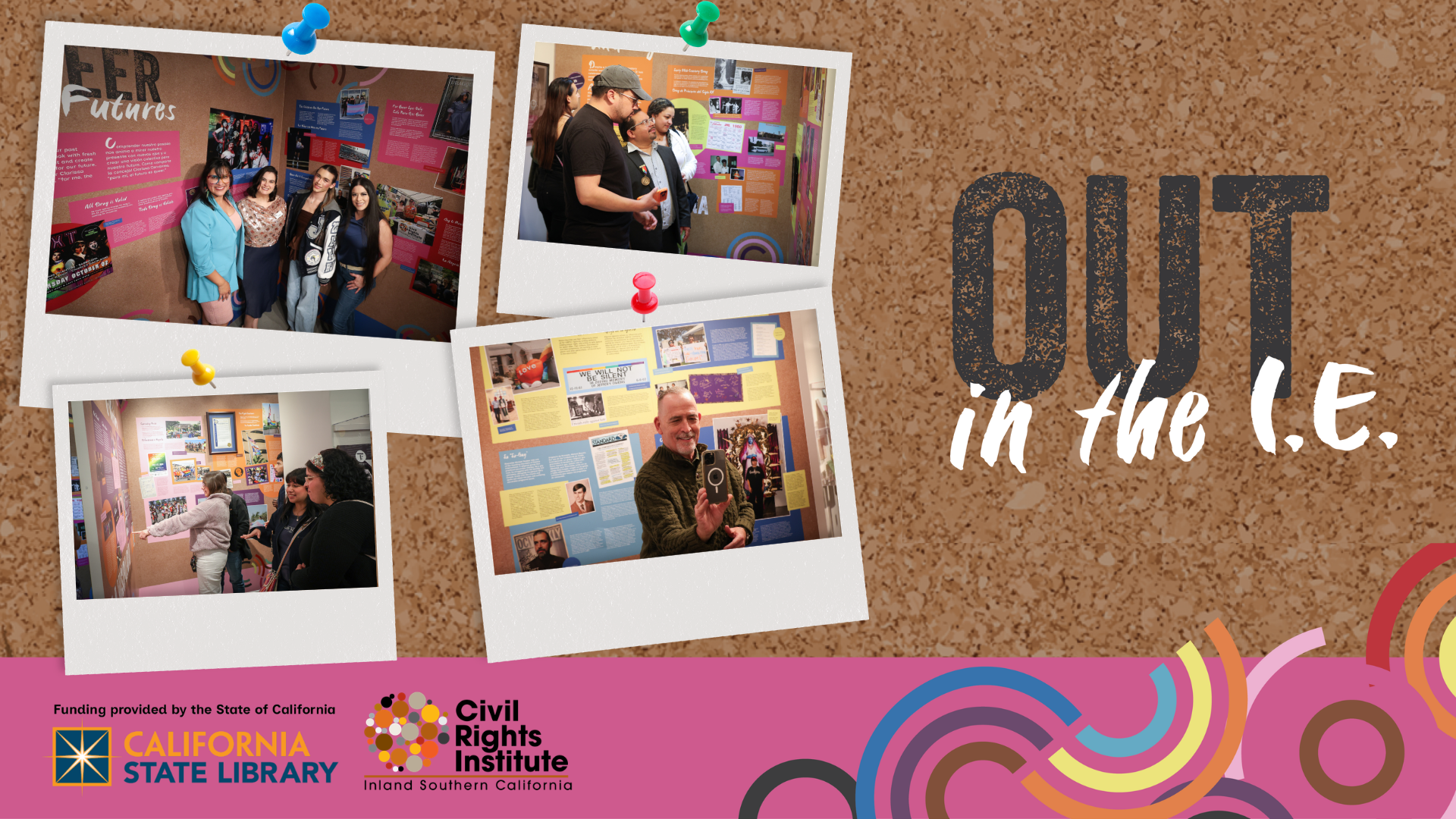 Out in the I.E.Out in the IE is a thematic survey exhibition covering 10 central themes: Art, AIDS, Community Care, Political Representation, Student Movements, Drag and Nightlife, Safety, Faith, Pride and Representation, and Queer Futures.Enter the exhibit
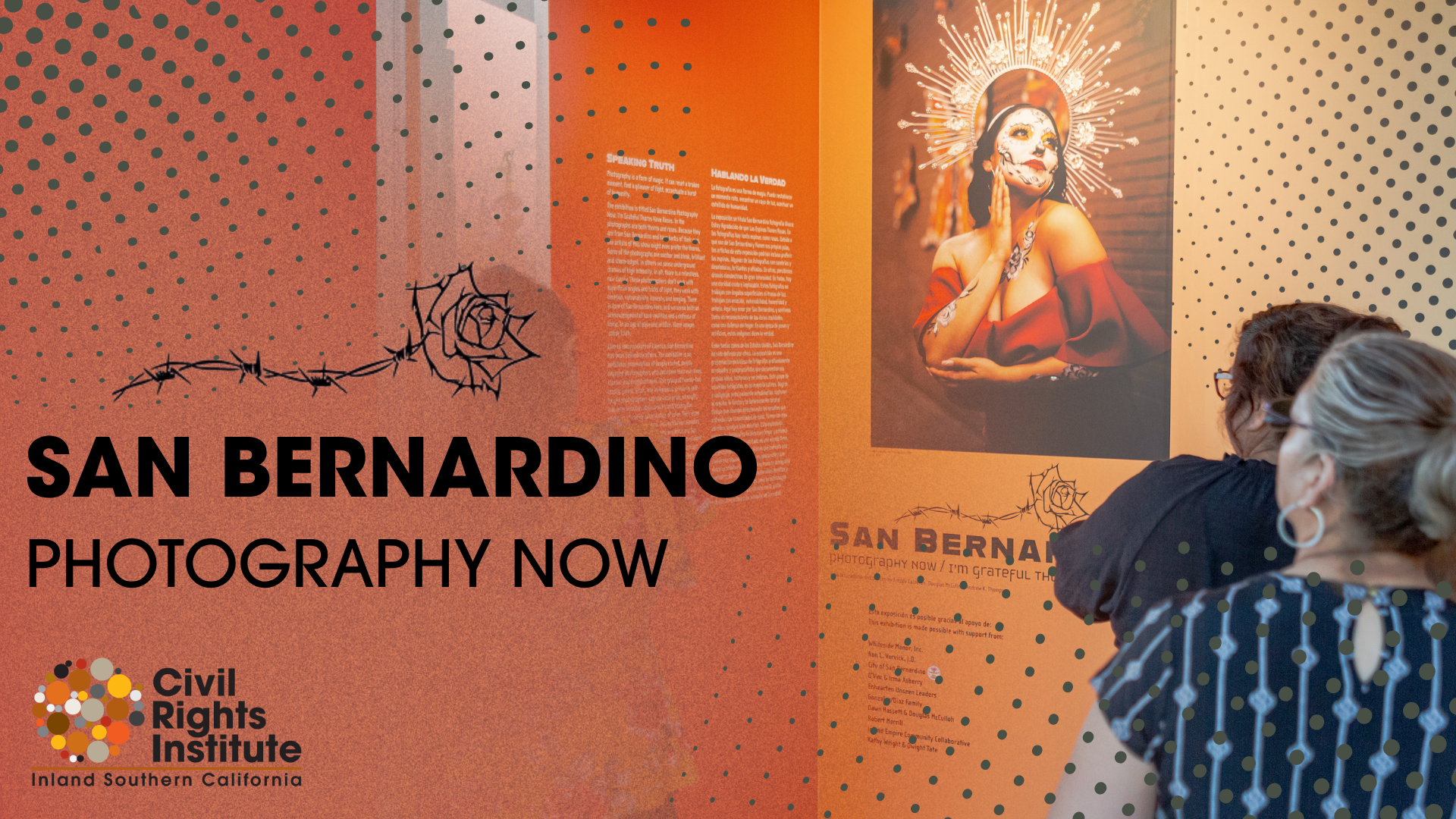 San Bernardino Photography Now"San Bernardino Photography Now: I’m Grateful Thorns Have Roses" is a simultaneous double-venue exhibition at the Garcia Center of the Arts in San Bernardino and The Civil Rights Institute. The exhibition is a major survey of the remarkable recent photography being produced by artists emerging from San Bernardino. The work addresses a wide array of social issues and is particularly anchored in the city’s Westside.Enter the exhibit
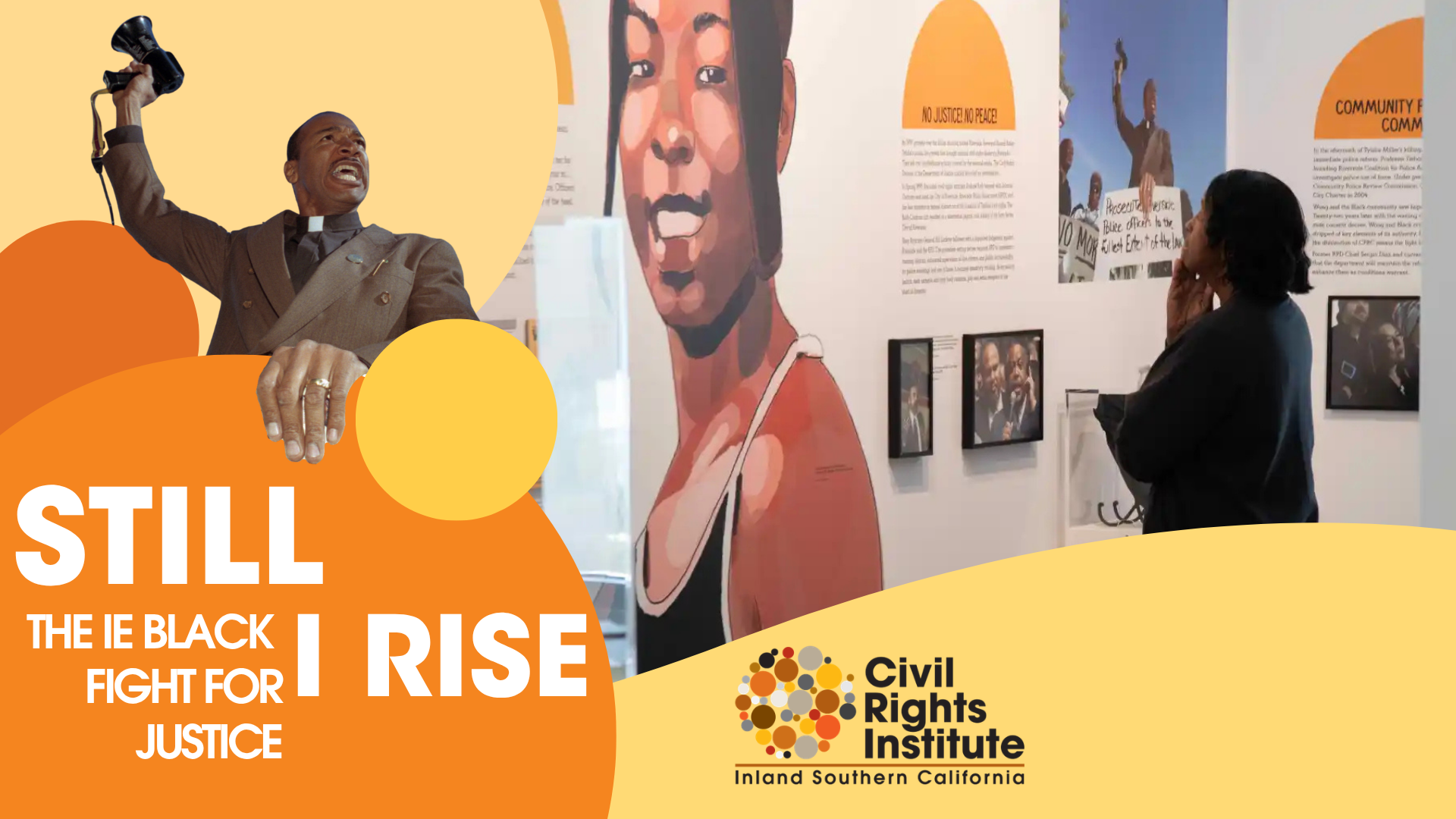 Still I Rise"Still I Rise: The Black IE Fight for Justice" examines the lived experience of Black residents of the Inland Empire from the Great Migration to the present. Themes of Black self-reliance, home, work, education, policing, and intersectionality bear witness to the adversity and discrimination faced by the Black community and the strategies they used to thrive in the face of adversity.Enter the exhibit
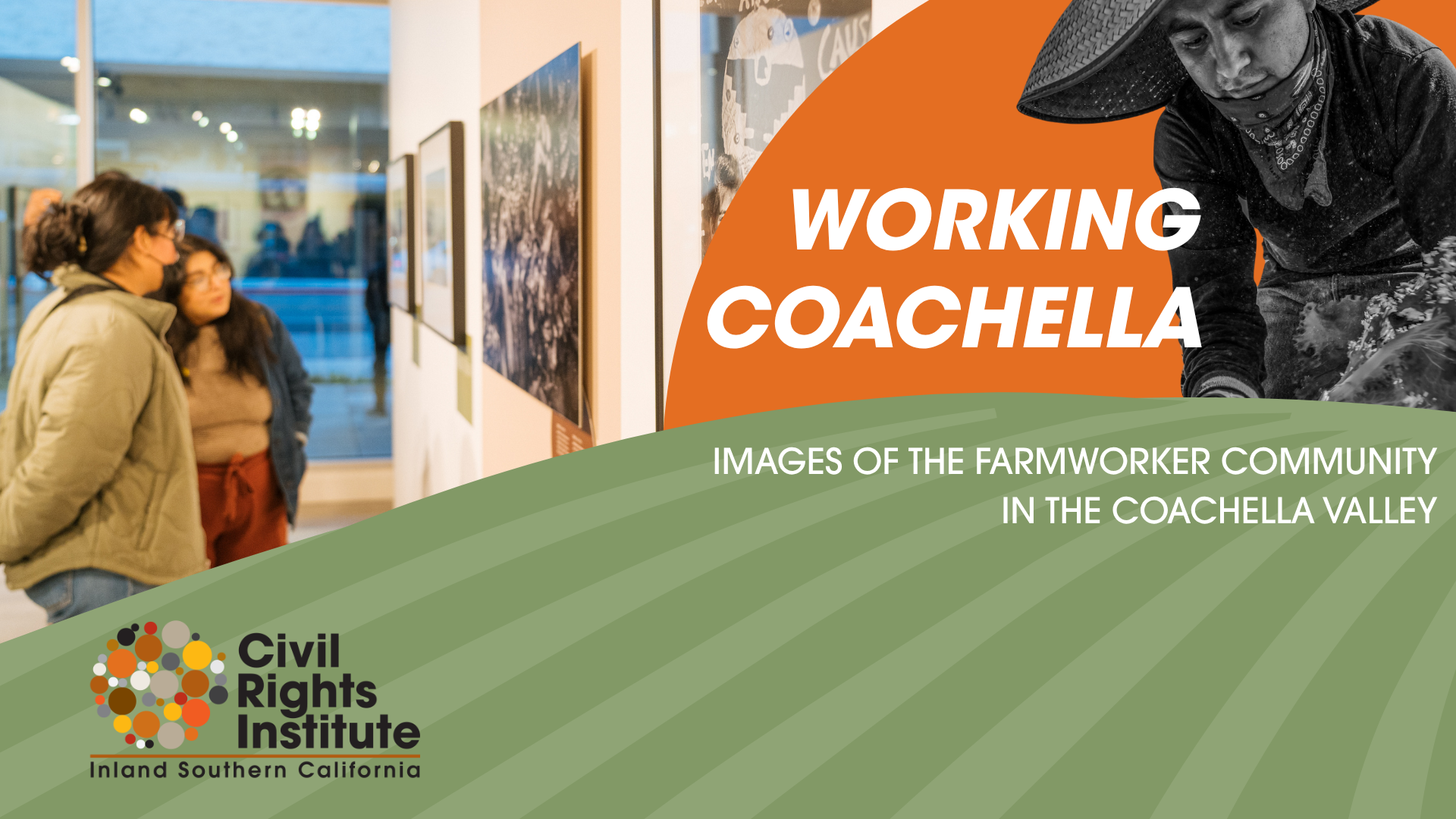 Working Coachella“Working Coachella: Images of the Farmworker Community of the Coachella Valley” makes visible the people who labor in the Coachella Valley’s fields, demonstrating who is responsible for producing the food we all eat.Enter the exhibit